Bangladesh produces for H&M, Zara, Uniqlo and thousands of private labels. Here's how the industry actually works — compliance, costs, lead times — and how small brands can source here successfully.
Bangladesh is the world's second-largest ready-made garment (RMG) exporter after China, shipping over $45 billion of apparel a year to brands from H&M and Zara to thousands of independent private labels. Yet many small-brand founders still assume the country is only for million-unit fast-fashion orders. That assumption costs them the best value in global apparel sourcing.
Why Global Brands Manufacture in Bangladesh
- Cost structure: Skilled sewing labor and vertically integrated knit mills keep FOB prices 15–30% below comparable factories in China or Turkey for cotton-based garments.
- Knitwear depth: The country's specialty is knit — tees, polos, hoodies, fleece, activewear. Yarn is spun, knitted, dyed, cut, and sewn within a single supply chain, often within a single district.
- Compliance maturity: Post-2013 reforms made Bangladesh home to some of the world's most audited factories. BSCI, SEDEX, WRAP, GOTS, OEKO-TEX, and GRS certifications are now standard among export factories.
- Duty advantages: Bangladesh enjoys preferential (often zero) duty access to the EU, UK, Canada, Australia, and Japan under GSP/EBA schemes — savings that flow straight into your margin.
The Compliance Landscape, Decoded
When a factory lists its certifications, here is what each one actually covers:
| Certification | What it audits | Why it matters to your brand |
|---|
| BSCI / SEDEX | Labor conditions, wages, working hours | Retailers and marketplaces increasingly require it from vendors |
| WRAP | Ethical production end-to-end | Gold standard for US-market compliance |
| GOTS | Organic fiber chain of custody | Lets you legally market garments as organic |
| OEKO-TEX | Chemical safety of finished textiles | Consumer-safety claim for sensitive-skin and kidswear lines |
| GRS | Recycled content verification | Backs up recycled-polyester sustainability claims |
What Small Brands Get Wrong About Bangladesh
Mistake 1: Assuming MOQs start at 10,000 pieces
Large woven factories do run five-digit MOQs. But specialized private-label factories — including ours — run dedicated small-batch lines starting at 50 pieces per style, precisely because startup brands are the fastest-growing customer segment.
Mistake 2: Chasing the absolute lowest FOB price
A quote 40 cents below market usually means the factory is cutting fabric weight, skipping pre-shrinking, or subcontracting your order to an unaudited unit. Compare quotes on specification, not just price.
Mistake 3: Skipping the video factory tour
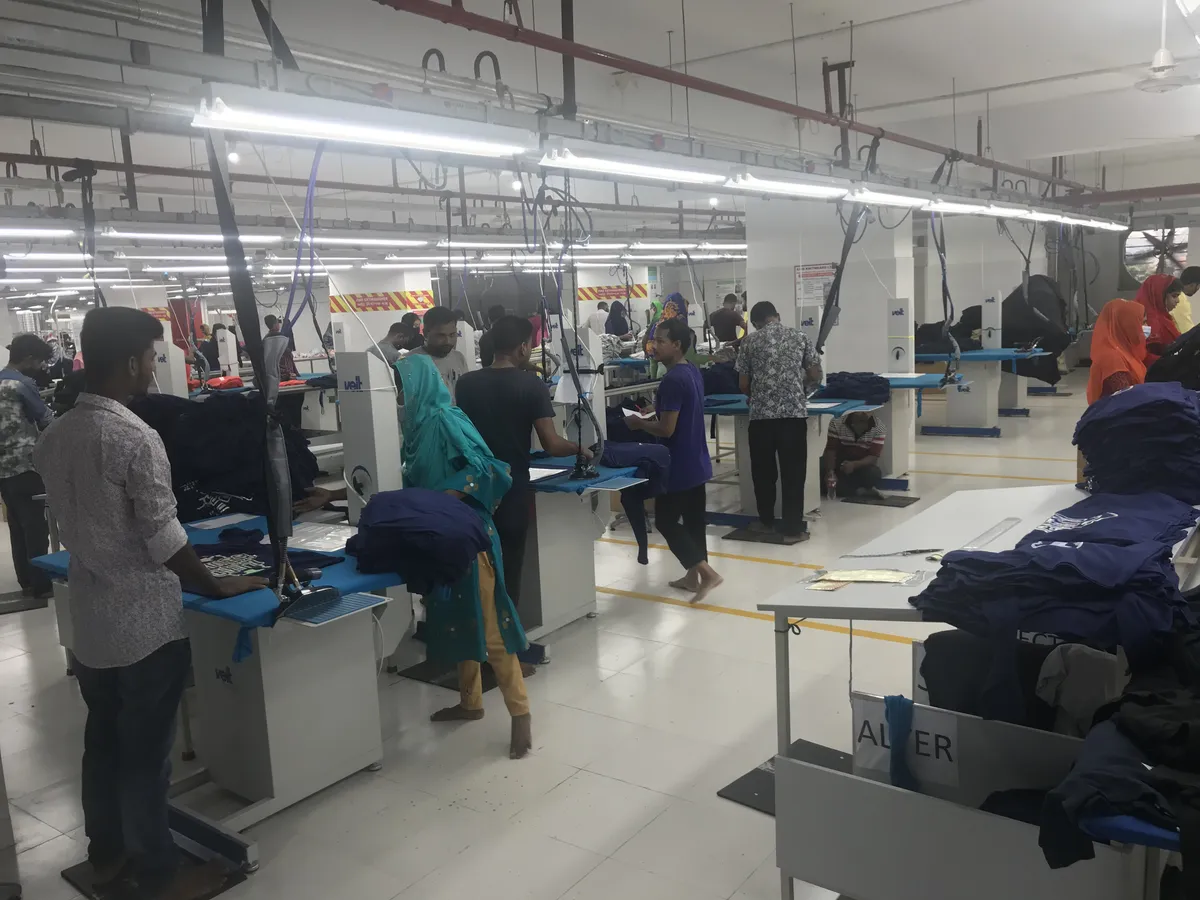
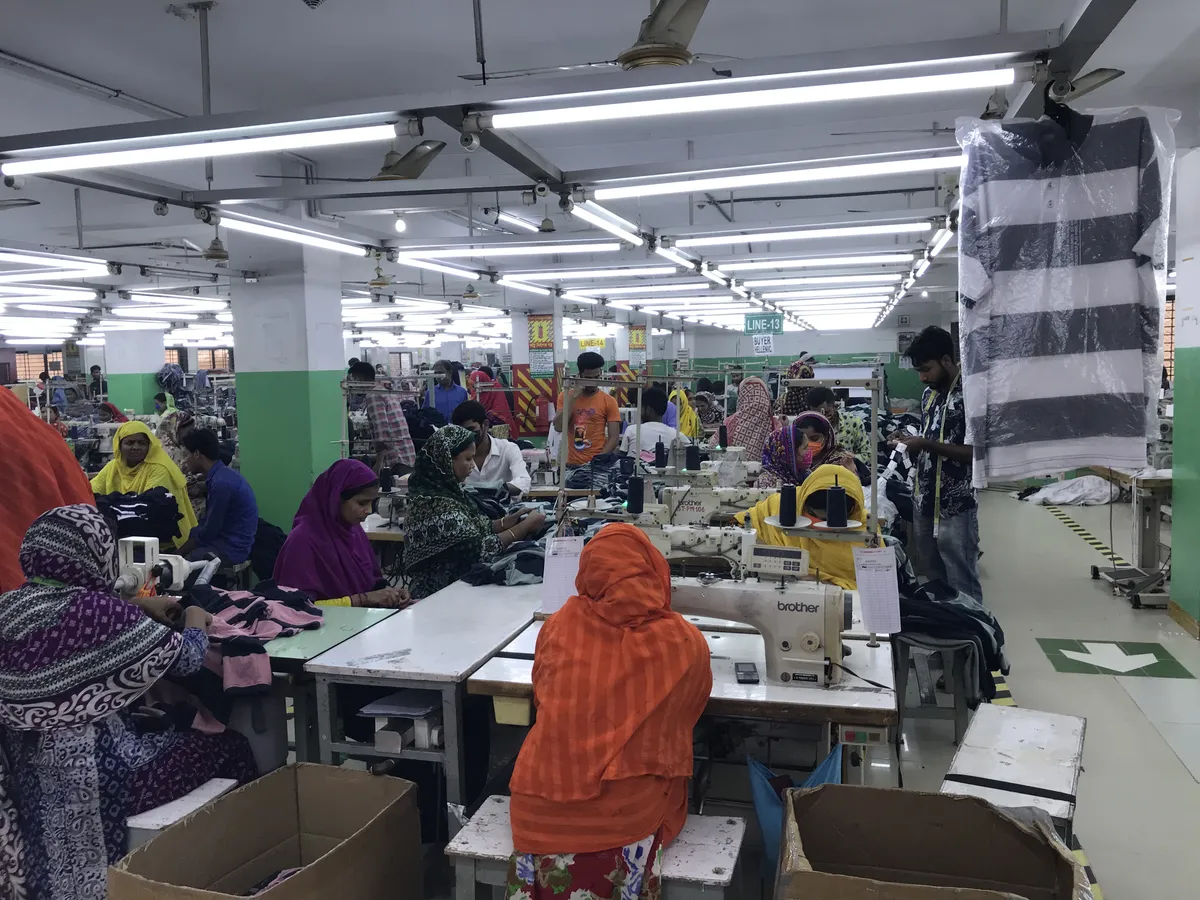
Any legitimate factory will happily walk you through cutting, sewing, and finishing floors on a live video call. If they will not show you the floor, they do not own the floor.
Lead Times and Logistics From Dhaka
Standard production runs 15–25 days after sample approval for knit programs. Air freight (DHL/FedEx) reaches the US or EU in 3–7 days for capsule drops; sea freight runs 14–35 days for bulk. DDP terms — where the factory clears customs and pays duties — have become the default for small-brand shipments because they eliminate surprise costs at the port.
The Bottom Line
Bangladesh rewards brands that come prepared: a clear tech pack, realistic quantities, and a factory partner whose certifications you have verified. Do that, and you tap the same supply chain the world's biggest retailers rely on — at a scale that fits a growing label.
Bangladesh as a Global Manufacturing Hub: The Real Advantages
Bangladesh is the world's second-largest apparel exporter, but the more useful framing for a brand building a private label collection is this: Bangladesh has the deepest concentration of specialized garment manufacturing knowledge outside China. That depth — in knitwear technology, woven outerwear, denim processing, and fine jersey — has been accumulating since the 1980s and is now encoded in a trained workforce of four million garment workers and thousands of experienced factory managers, production supervisors, and quality engineers.
The structural advantages of Bangladesh manufacturing include the EU's GSP+ tariff preference program offering 0% import duty to most European markets for compliant factories, a mature Chittagong Port infrastructure for container shipping, a large domestic textile ecosystem reducing dependence on imported yarn and fabric for cotton categories, and government investment in export processing zones with dedicated utilities. Combined, these factors create a cost-quality profile that is extremely difficult for competing geographies to match for premium basics and mid-market fashion categories.
What Factory Partnerships Actually Look Like in Practice
The most successful brands working with Bangladesh factories share a common pattern: they treat the factory as a manufacturing partner rather than a commodity vendor. This means visiting before placing the first significant order, maintaining consistent communication through a single point of contact, providing volume forecasts so the factory can plan raw material procurement and labor scheduling, and paying invoices on the agreed timeline without requiring reminders. These behaviors signal that the brand is worth investing in — and the factory's investment is what the brand needs to succeed.
Most Bangladesh factories have dedicated merchandisers whose English is business-fluent and who understand international trade documentation, compliance requirements, and export procedures. Factory owners respond most strongly to buyers who visit at least once a year, who understand production fundamentals well enough to ask intelligent questions about inline quality control and capacity planning, and who bring a growing, predictable order pipeline. Volume and reliability are the two most powerful negotiating positions any buyer can hold.
Expert Tip Before awarding your first order to any Bangladesh factory, ask three specific questions: Which other international brands do you currently produce for? Can I speak with one of their buyers for a reference? Can I visit during active production, not just for a factory tour? The answers reveal whether the factory is genuinely partnership-oriented or simply hungry for any order it can get to fill empty capacity.
Frequently Asked Questions
How do I find reliable garment factories in Bangladesh?
The most reliable channels are referrals from other brand owners in your network, established sourcing agents with verifiable client references, Alibaba Gold Supplier listings combined with independent audit reports, and BGMEA (Bangladesh Garment Manufacturers and Exporters Association) member directories. Direct factory introductions through an industry contact provide the fastest path to a verified partner.
What are typical MOQs for Bangladesh production?
For standard tees and hoodies using stock fabrics, MOQs typically start at 100–200 units per style and color. For custom-developed fabrics or complex constructions, expect 300–500 units per color as the minimum economically viable run. Some factories offer lower MOQs at a premium per-unit price to accommodate early-stage brands.
What import documents do I need when receiving goods from Bangladesh?
Standard import documentation includes: Commercial Invoice, Packing List, Bill of Lading (or Airway Bill for air freight), Certificate of Origin (Form A for GSP preferences), and applicable certification documents (GOTS, OEKO-TEX, SEDEX where required). Your customs broker handles the import filing; your factory is responsible for providing accurate and complete shipping documentation.
Key Takeaways
- Bangladesh is the world's second-largest apparel exporter with 40 years of deep specialization in knitwear and jersey categories.
- EU GSP+ makes Bangladesh-origin goods duty-free to most European markets for factories with active compliance certification.
- Treat your factory as a long-term partner: visit once a year, pay on time, and provide rolling volume forecasts.
- MOQs start at 100–200 units for stock fabrics and 300–500 units for custom fabric development.
- Your customs broker handles import filing; ensure your factory provides complete and accurate shipping documentation every time.
MM
Written by
Md Mostain Salah Uddin
Member of the Essential Group production team, sharing first-hand insight from our Dhaka factory floor.