
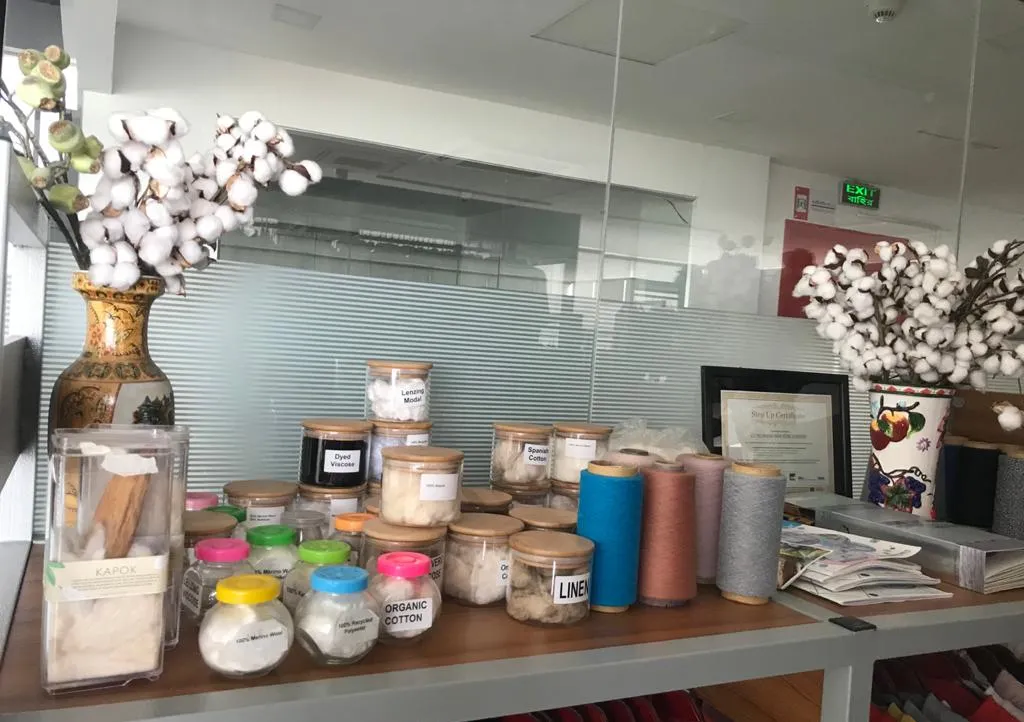
Fabric is the biggest single decision in any apparel program. It drives how the garment feels on the body, how well your artwork prints, how the piece survives repeated washing, what it costs per unit, and what story you can honestly tell about sustainability.
This guide works through the comparisons brands ask us about most: cotton vs polyester, organic vs conventional cotton, combed vs carded yarn, French terry vs fleece, and the main knit constructions. It closes with a GSM cheat sheet and a simple framework for choosing fabric for a first collection.
Cotton vs polyester: the trade-offs that matter
Cotton is a natural cellulose fiber; polyester is a petroleum-based synthetic. That single difference explains almost everything else. Cotton feels soft and dry against the skin, breathes well, and absorbs moisture. Polyester feels smoother and slicker, wicks sweat to the surface instead of absorbing it, and dries much faster, which is why it dominates activewear.
For printing, cotton is the easier canvas. Water-based and plastisol screen printing, DTG, and DTF all perform well on cotton. Polyester is best decorated with sublimation, which gives vivid, permanent, all-over prints but only works on light-colored polyester; standard inks on polyester also risk dye migration under heat. Durability favors polyester: it resists shrinking, wrinkling, and abrasion, and holds its shape wash after wash. Cotton softens beautifully over time but can shrink and fade if not properly pre-treated.
On price, polyester is typically cheaper and more stable, while cotton moves with agricultural markets. Sustainability is genuinely nuanced. Cotton is biodegradable but water- and pesticide-intensive in conventional farming; polyester is fossil-based and sheds microplastics, though GRS-certified recycled polyester meaningfully reduces virgin inputs. Practical verdict: cotton for premium basics and printed streetwear, polyester for performance wear, and blends when you want a balance of both.
Cotton vs organic cotton: what you actually pay for
The fiber itself is the same species of cotton. The difference is agronomy: organic cotton is grown from non-GMO seed without synthetic pesticides or fertilizers, using crop rotation and natural methods to maintain soil health. The result is not automatically a softer fabric, since hand feel depends on staple length, spinning, and knitting, but it is a materially lower-impact farming process.
The word organic on a label carries legal and marketing weight, so certification matters. GOTS (Global Organic Textile Standard) certifies the entire chain of custody from fiber to finished garment, with transaction certificates at each step. If you plan to market a product as organic, every link in your supply chain needs to be certified, including the factory. We support GOTS-certified production and can source certified organic fabrics for programs that need the claim to hold up.
Organic cotton typically adds around 20 to 30 percent to fabric cost, depending on quality and market supply, plus certification overhead. Whether that is worth it is a brand question, not a fabric question: for sustainability-led brands the premium supports higher retail pricing and a credible story, while for price-driven basics conventional combed cotton is usually the smarter spend.
Combed vs carded cotton: the quiet quality lever
After cotton is cleaned, the fibers are carded, meaning roughly aligned into a continuous strand. Combed cotton goes through an additional combing stage that removes short fibers and remaining impurities, leaving longer fibers laid parallel before spinning. The extra step produces a finer, smoother, stronger yarn.
In the finished garment, combed cotton means a softer hand feel, a cleaner and more even surface for printing, and noticeably less pilling over time. Carded cotton is cheaper and slightly coarser, with a more matte, rustic look. For retail-quality t-shirts, combed (often combed ring-spun) cotton is worth the modest upcharge; carded is acceptable for promotional shirts and budget-driven programs where cost per unit wins.
French terry vs fleece: the hoodie decision
French terry and fleece are close cousins: both are knits with a smooth face and a textured back, often made on similar machines. The difference is what happens to the back. French terry keeps its small yarn loops intact, giving a cool, absorbent loopback surface. Fleece takes the same construction and brushes the back to raise a soft, insulating nap.
That construction difference maps directly to weight and season. French terry typically runs around 240 to 320 GSM, breathes well, and suits spring, summer, and fall: lightweight hoodies, crewnecks, joggers, and loungewear. Fleece typically runs around 280 to 450 GSM, traps warmth in its brushed nap, and is the default for winter hoodies and cold-climate markets.
For hoodie programs specifically, a premium loopback French terry reads as elevated and layers well year-round, while a heavyweight brushed fleece in the 350 to 450 GSM range delivers the boxy, substantial feel streetwear customers expect. Many brands run both, French terry for drops shipping in warm months and fleece for winter, using the same silhouette and swapping only the fabric.
Single jersey vs interlock vs pique: which knit for which product
Single jersey is the workhorse of t-shirt manufacturing: knit on a single set of needles, it is light, drapey, and cost-effective, with a smooth face and a looped back. Its edges curl when cut, which factories handle in construction, and it is the default choice for tees, tanks, and lightweight dresses.
Interlock is a double knit that looks identical on both sides. It is smoother, thicker, and far more dimensionally stable than single jersey, with no edge curl. Choose it for premium tees with a structured hang, baby and kids wear where softness and stability both matter, and polo-adjacent styles that need body without a textured surface.
Pique is knit with a raised, honeycomb-textured surface. It is breathable, hides minor wrinkles and light stains, and reads instantly as a classic polo. Use pique when you want texture and a smart-casual signal; use jersey or interlock when you want a clean print surface.
Natural vs synthetic vs blends: a decision framework
There is no universally best fiber, only the best fiber for a given product, customer, and price point. Start from the end use and work backward. As a starting framework:
- Everyday basics and printed tees: 100% combed cotton for hand feel and print quality
- Activewear and performance: polyester or nylon with around 5–15% elastane for stretch and moisture management
- Hoodies and sweats: cotton or cotton-rich blends such as 80/20 cotton-polyester for softness with shape retention
- Durability on a budget: 50/50 cotton-polyester blends that resist shrinking and cost less than pure cotton
- Sustainability positioning: GOTS-certified organic cotton or GRS-certified recycled polyester, with the paperwork to back the claim
- Elevated hand feel: long-staple combed cotton, or cotton blended with modal or lyocell for drape and softness
GSM cheat sheet: choosing the right fabric weight
GSM (grams per square meter) measures fabric weight and density. Heavier fabric feels more substantial, drapes less, holds structure better, and costs more per garment. It is one of the most important numbers in your tech pack, and it should always be specified with a tolerance; mills typically hold around plus or minus 5 percent.
Use this cheat sheet as a starting point for knits:
- 120–140 GSM: ultra-light fashion tees and drapey layering pieces
- 140–160 GSM: lightweight summer tees and promotional shirts
- 160–190 GSM: standard everyday t-shirts; the retail sweet spot
- 200–250 GSM: heavyweight, boxy streetwear tees
- 240–320 GSM: French terry for lightweight hoodies, crewnecks, and joggers
- 300–360 GSM: standard fleece hoodies and sweatpants
- 380–450 GSM: heavyweight winter fleece and premium streetwear hoodies
How to choose fabric for your first collection
Start from your customer and end use, not from a fabric swatch you happen to like. Define the product, the season it ships, the retail price you need to hit, and the story you want the garment to tell. Then limit yourself: a first collection runs best on two or three fabrics shared across styles. Fabric minimums, not garment minimums, are often the real constraint in small-batch production, and consolidating styles onto shared fabrics keeps both MOQs and costs manageable.
Never approve a fabric from a description alone. Order sample yardage or a sample garment, then wash-test it the way your customer will: check shrinkage, twisting, pilling, and color fastness after several home washes before committing to bulk. A week of testing is far cheaper than a production run that disappoints.
This is also where a full-package manufacturer earns its keep. Our sourcing team matches fabric to your target hand feel, GSM, and budget, and with production MOQs from 50 pieces per style you can validate a fabric in a real garment run before scaling. Browse our fabric library at essentialgroupbd.com/fabrics, or request a custom sample to compare options side by side.
Frequently asked questions
Is cotton or polyester better for t-shirts?
For everyday retail tees, 100% combed cotton is usually better: it feels softer, breathes well, and takes screen printing and DTG cleanly. Polyester wins for athletic tees where fast drying and moisture wicking matter, and 50/50 blends sit in between on cost and durability.
What is the best fabric for hoodies?
Brushed fleece in the 300–450 GSM range is the standard choice for warm, structured hoodies, while loopback French terry around 240–320 GSM suits lighter, year-round styles. Cotton-rich blends such as 80/20 cotton-polyester balance softness with shape retention.
What is the difference between french terry and fleece?
Both have a smooth face and a textured back, but French terry keeps its yarn loops intact while fleece brushes them into a soft, insulating nap. French terry is lighter and more breathable; fleece is heavier and warmer.
Is organic cotton worth the higher cost?
It typically adds around 20–30 percent to fabric cost, so it pays off when sustainability is central to your brand and you can support a higher retail price. To market a garment as organic, the full supply chain, including the factory, should be GOTS certified.
What does GSM mean in fabric?
GSM stands for grams per square meter and measures fabric weight and density. Higher GSM means a thicker, heavier, more structured fabric; standard t-shirts run around 160–190 GSM and standard hoodies around 300–360 GSM.
What GSM is best for a heavyweight streetwear tee?
Around 200–250 GSM gives the dense, boxy feel associated with heavyweight streetwear tees. Anything above roughly 240 GSM starts to feel closer to a light sweatshirt fabric.
What is combed cotton?
Combed cotton goes through an extra combing process that removes short fibers and impurities before spinning, producing a smoother, stronger yarn. Garments made from it feel softer, print more cleanly, and pill less than carded cotton.
Ready to put this into production?
Low MOQ from 50 pcs, DDP shipping worldwide, and a real merchandiser on your order.
Request a Quote