OEM and ODM are the two fundamental ways to work with a clothing factory. One means the factory builds your design; the other means you put your brand on the factory's design. The model you choose determines who owns the product, how fast you can launch, what development costs you carry, and how easily a competitor can copy you.
This guide explains both models in plain terms, untangles them from private label and white label, and helps you decide which fits your stage, whether you are launching a first collection or scaling an established line.
What OEM means in apparel
OEM stands for Original Equipment Manufacturer. In apparel, it describes an arrangement where you, the brand, supply the design and the factory manufactures it to your specification. You provide a tech pack or a reference sample covering measurements, fabric, trims, construction, and branding, and the factory's job is to reproduce it accurately at scale.
Under OEM, the design belongs to you. The factory contributes production expertise: translating your spec into patterns, sourcing the fabrics you call out, developing samples for your approval, and running bulk production. Most custom clothing manufacturing for independent brands works this way, even when nobody uses the acronym.
OEM is the right frame whenever the product itself is your point of difference: a signature fit, a technical feature or a construction detail that competitors cannot pick from a catalog.
What ODM means in clothing manufacturing
ODM stands for Original Design Manufacturer. Here the factory has already done the design work. It maintains a library of developed styles, blocks and fabrics; you select from that library, apply your branding and place an order. Customization is usually limited to labels, prints, embroidery, colorways, and minor modifications such as a different trim or hem finish.
The appeal is speed and low development cost. Patterns are graded, fabrics are tested, and the fit has been proven on earlier runs, so you can move from selection to an approved production sample in a fraction of the time a ground-up development takes.
The trade-off is exclusivity. The factory typically owns the base design and may offer the same style to other buyers. Unless you negotiate exclusivity in writing, assume a competitor can order the same garment with a different label sewn in.
OEM vs ODM: the key differences
The practical differences come down to who owns what, how fast you can launch, and where the costs sit.
- Design ownership: OEM designs belong to the brand; ODM base designs stay with the factory.
- Intellectual property: under OEM your tech packs, patterns, and prints are yours to protect; under ODM only your branding and artwork are exclusive by default.
- Speed to market: ODM can reach production in weeks because development is finished; OEM adds pattern making and one or more sampling rounds, typically several weeks more.
- Development cost: OEM carries sampling, pattern and fit-testing costs; ODM development costs are minimal to none.
- Unit cost: ODM is often cheaper at small volumes because material demand is pooled across buyers; OEM pricing becomes competitive as your quantities grow.
- MOQ: ODM minimums are usually lower since the factory aggregates fabric orders; OEM minimums depend on custom fabric and trim minimums.
- Differentiation: OEM gives you full control over fit, fabric, and construction; ODM limits you to surface-level branding.
Private label, white label, OEM, ODM: untangling the terms
These four terms overlap and get used loosely, which causes real confusion when you compare manufacturers. The reliable test is to ask two questions about any program: who created the design, and who else is allowed to sell it?
With that test in mind, the terms sort out roughly like this:
- White label: a generic, ready-made product that multiple brands sell under their own logos. Closest to pure ODM with zero modification.
- Private label: a product made for one brand, usually with meaningful customization such as custom fit, fabric, or construction. In apparel this most often describes OEM-style production sold under the brand's own name.
- OEM: you design, the factory manufactures. This is the manufacturing model behind most private label programs.
- ODM: the factory designs, you brand. This is the manufacturing model behind most white label programs.
Which model fits startups vs established brands
For startups, ODM or a hybrid approach lowers risk. You validate demand with proven styles, put your capital into branding and marketing rather than development, and launch quickly. It is a sensible way to test a category before committing to custom development. The exception is when the product itself is the brand: if your pitch is a better fit, a technical fabric or a distinctive construction, ODM cannot deliver it and OEM is worth the longer runway.
Established brands run mostly OEM, because control and IP matter more at scale and their volumes make custom development economical. Many still use ODM tactically to fill assortment gaps: basics, accessories, or seasonal add-ons that do not justify development spend.
In practice the line blurs. A common pattern we see is hybrid sourcing: core styles developed OEM, supporting basics sourced ODM from the same factory, so quality standards and logistics stay consolidated under one roof.
How OEM and ODM work at a full-package factory
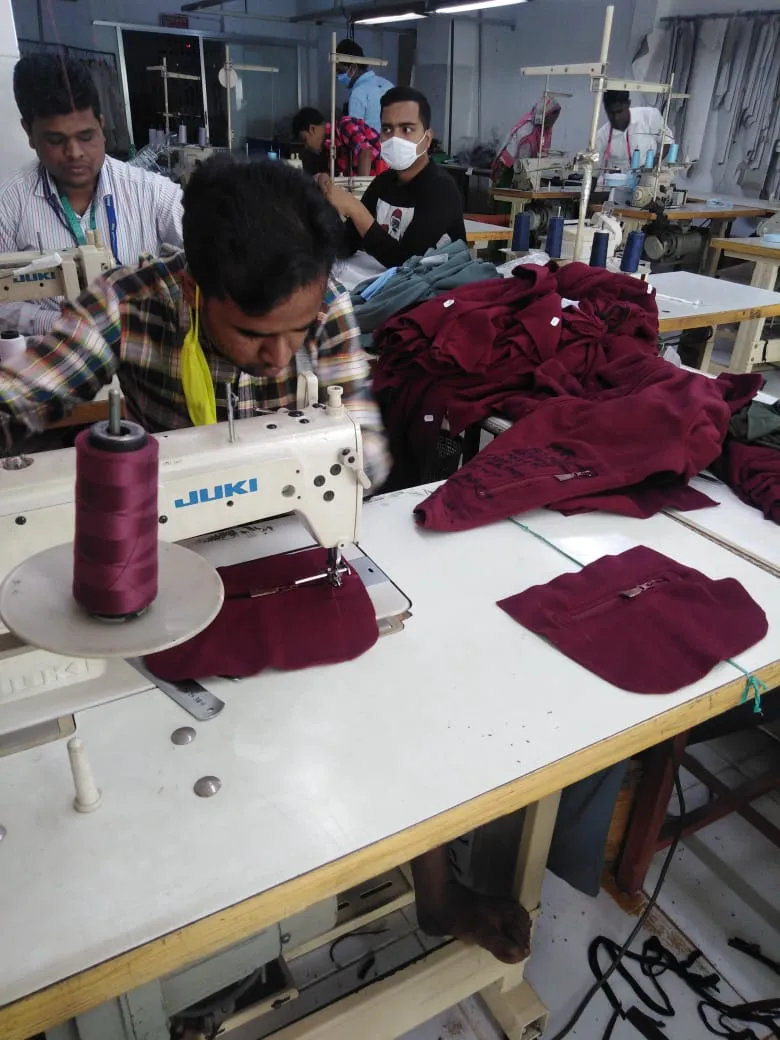
A full-package manufacturer handles the whole chain from development to delivery, which is why many can run both models side by side. At Essential Group, OEM and ODM programs move through the same production system in our factory in Khilkhet, Dhaka, with in-house printing and embroidery and final inspection to AQL 2.5.
An OEM order typically moves through tech pack review, pattern making, fabric sourcing, a development sample, one or two revision rounds, a pre-production sample, bulk production, inspection, and shipment. Expect the development phase to add several weeks compared with an ODM order.
An ODM order skips most of that. You select a style and fabric, the factory applies your labels, prints, or embroidery, you approve a branded sample, and the order goes to bulk. Because development is already amortized, this route also works at low minimums; our MOQ starts at 50 pieces per style, which makes a hybrid OEM-plus-ODM range practical even for a first collection.
Either way, a full-package setup means one partner is accountable for fabric, production, quality, and delivery, including DDP shipping where duties and final delivery are handled for you.
Questions to ask a manufacturer before you commit
Whichever model you lean toward, put these questions to any factory before signing. The answers tell you how the relationship will actually work once money is on the table.
- Who owns the design, patterns, and grading after development, and is that stated in writing?
- For ODM styles: can the same design be sold to other brands, and what would exclusivity cost?
- What is the MOQ per style and per colorway under each model?
- What do samples cost, how long do they take, and are sample fees credited against the bulk order?
- Can you develop a tech pack from my sketches or a reference sample if I do not have one?
- Which compliance audits and fabric certifications can you support, such as BSCI, SEDEX, WRAP, GOTS, OEKO-TEX, or GRS?
- What QC standard do you inspect to, and will I receive inspection reports before shipment?
- What shipping terms do you offer, and can you quote DDP so duties and delivery are included in the price?
Frequently asked questions
What does OEM mean in clothing manufacturing?
OEM (Original Equipment Manufacturer) means the brand supplies the design, usually as a tech pack, and the factory manufactures the garment to that specification. The brand owns the design; the factory contributes production expertise.
What does ODM mean in clothing manufacturing?
ODM (Original Design Manufacturer) means the factory offers styles it has already designed and developed. Brands select a style, add their own labels, prints, or colorways, and sell it under their own name.
What is the main difference between OEM and ODM?
Who creates the design. In OEM the buyer designs and the factory produces; in ODM the factory designs and the buyer brands. That single difference drives everything else: OEM gives you IP ownership and full control, while ODM gives you speed and lower development cost.
Is private label the same as ODM?
Not exactly. Private label means a product made for one brand and can follow either model, though in apparel it usually describes customized OEM-style production. White label, where many brands sell the same generic product, is the term closest to pure ODM.
Which is cheaper, OEM or ODM?
ODM is usually cheaper upfront because development, patterns, and fabric testing are already done, and minimums are often lower. OEM unit prices become competitive as order volumes grow, so the answer depends on your quantity and how much customization you need.
Who owns the design in ODM manufacturing?
The factory typically retains ownership of the base design and may sell the same style to other buyers. Your logos, artwork, and labels remain yours, but if you need exclusivity on the style itself, negotiate it in writing before ordering.
Can one factory handle both OEM and ODM orders?
Yes, full-package manufacturers commonly run both. Essential Group, for example, produces OEM orders from client tech packs and ODM orders from developed styles, both with MOQs from 50 pieces per style.
Ready to put this into production?
Low MOQ from 50 pcs, DDP shipping worldwide, and a real merchandiser on your order.
Request a Quote