
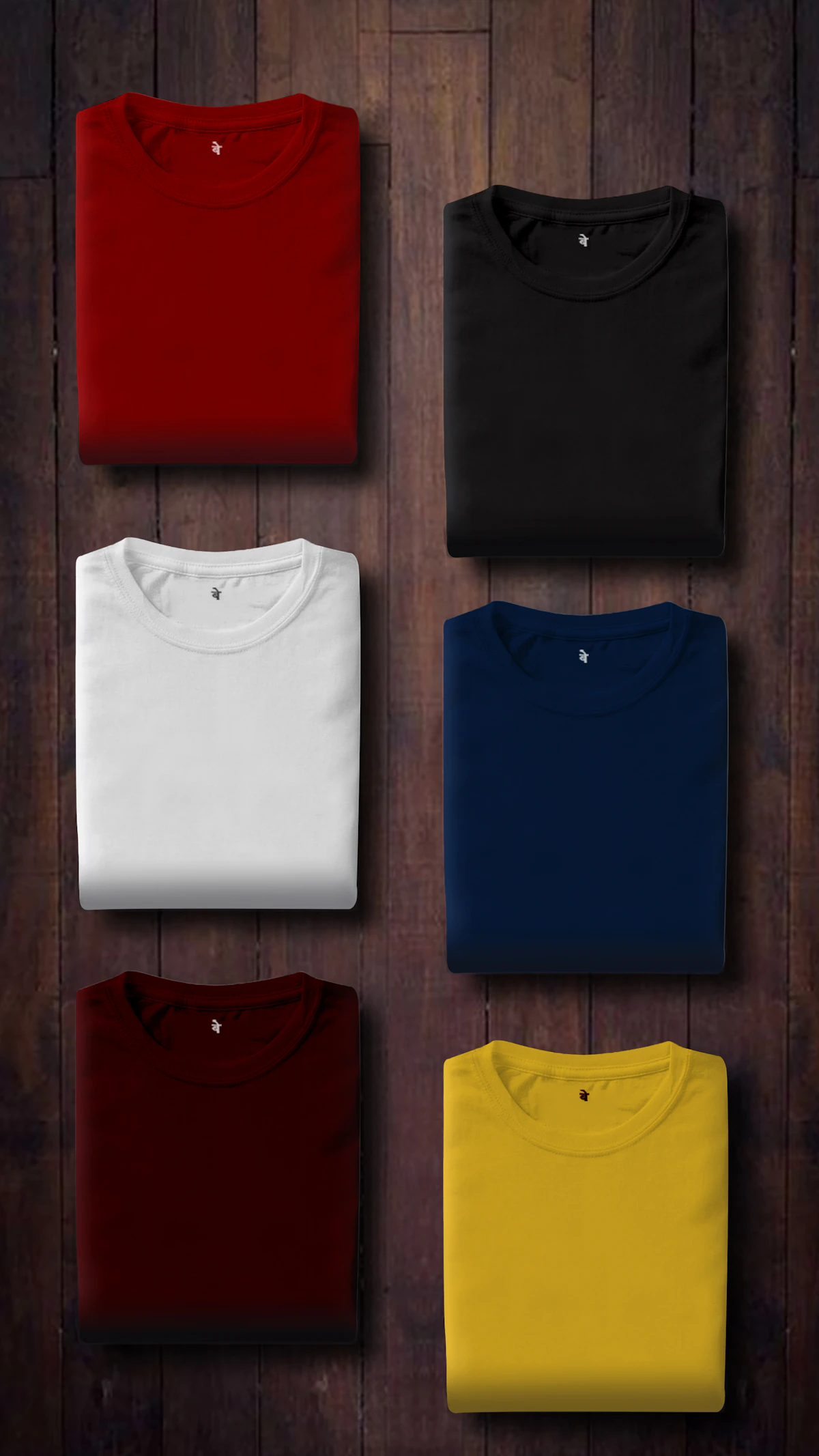
About single jersey
Single jersey is the standard t-shirt knit: a plain fabric made on a single needle bed, with a smooth face for printing and a soft looped back. Light, breathable, and naturally stretchy, it is what the vast majority of tees, long-sleeve tops, and everyday basics are made from.
Weight defines the product: 140–160 GSM for light summer and promo tees, 160–180 GSM for standard retail styles, and 200–240+ GSM for oversized and heavyweight streetwear tees. Combed ring-spun yarn plus an enzyme or silicone wash turns the same knit into a genuinely premium retail fabric.
Quote with Single Jersey| Typical weight | 140–240+ GSM (180 GSM standard, 240 GSM heavyweight) |
|---|---|
| Composition | 100% cotton, CVC, poly-cotton, or viscose blends |
| Yarn | Combed ring-spun (retail) or carded/open-end (promo) |
| Knit | Single jersey (plain knit, single needle bed) |
| Feel | Soft, light, breathable, natural stretch |
| Best decoration | Screen print, DTF, DTG, embroidery |
What we make with single jersey
Advantages
- Smooth face prints cleanly in screen, DTF, and DTG
- Light, breathable, and soft against the skin
- Most cost-efficient knit for tees
- Wide weight range from 140 to 240+ GSM
- Combed ring-spun grades deliver a true retail hand
Good to know
- Cut edges curl by nature; we relax the fabric before cutting and control it in sewing
- Carded or open-end yarn is cheaper but coarser, so retail brands should specify combed ring-spun
- 100% cotton jersey shrinks unless it is compacted; an enzyme or silicone garment wash improves both hand and dimensional stability
Single Jersey — common questions
What is single jersey fabric?
Single jersey is a plain knit produced on a single needle bed, with a smooth face and a looped back. It is the standard t-shirt fabric: light, breathable, with natural stretch, typically 140–240+ GSM in cotton or cotton blends.
What GSM is best for t-shirts?
160–180 GSM suits most retail tees. Oversized and boxy styles usually go heavier, typically 200–240 GSM, so the garment holds its shape. 220–240+ GSM reads as heavyweight streetwear, while lighter 140–150 GSM works for promo and summer tees.
What is the difference between combed and carded cotton jersey?
Combed yarn has short fibers removed before spinning, so the fabric is smoother, stronger, and less prone to pilling. Carded and open-end yarns cost less but feel coarser, which is fine for promo tees; retail brands typically choose combed ring-spun.
Is single jersey good for printing?
Yes. Its smooth, flat face is ideal for screen printing, DTF, and DTG, and combed ring-spun jersey gives the cleanest print surface. We print and embroider in-house, so fabric and decoration are matched from the sampling stage.
Why do single jersey edges curl?
Curling is inherent to the plain-knit structure. Because all loops are formed on one needle bed, the internal stresses of the fabric are unbalanced, so raw edges roll toward the face at the top and bottom and toward the back at the sides. It has no effect on the finished garment; we relax the fabric before cutting and control the edges during sewing.
What does enzyme or silicone washing do to jersey?
Enzyme wash removes surface fuzz for a cleaner, softer face and reduces pilling; silicone wash adds a smooth, supple hand. Both are common finishing upgrades for retail-quality tees.
Want a single jersey sample?
We'll send swatch options and quote your style on this fabric — low MOQ from 50 pcs, DDP worldwide.
Request a Quote